If you crave those last few minutes of your benefit-rich yoga class when you settle into savasana for stillness and relaxation, meet your new best friend: the practice of yoga nidra. An ancient practice to tame the nervous system, you’ll find your mind in a more collected, peaceful state as a result of the exercise.
So what does a yoga nidra session look like? At first glance, the practice may seem like nothing more than lying on the floor wrapped up in super comfy clothing and blankets. (And socks. You’ve got to wear fuzzy socks.)
But there’s a power in stillness. And modern-day science is catching up to what yogis have known for ages: Yoga nidra, also known as yogic sleep, improves your health in all sorts of surprising ways.
Hint: Many who practice yoga nidra report feeling fully rested in as little as 30 to 120 minutes of practice. That’s a lot shorter than the eight hours of sleep usually required for that type of restoration.
And then there’s the 65 percent dopamine boost found in one study. More on that later … plus, there’s a free guided yoga nidra relaxation below, too.
What is yoga nidra?
Yoga nidra is a powerful relaxation practice that can act as a natural stress reliever. Some people use yoga nidra for sleep improvement, although when practiced correctly, you don’t actually fall asleep.
The ancient yoga practice helps you draw your consciousness inward so you can move into a more self-aware form of “sleep.”
“It’s the same process as meditation,” explained tantra yogi Michele D’Agostino, instructor of kinesiology at Penn State University. “You are completely relaxed on the physical level but the mind remains alert.”
While the yoga nidra definition simply translates to”yogic sleep,” there are some complex things going on on the neurological level as an instructor guides your breath and focus throughout different parts of the body.
Yoga nidra helps shift your brain into the zone between sleeping and waking states. It’s like your body sleeps while your mind remains conscious and clear.
Brainwave studies have shown higher alpha and theta brainwave power in yogis who practice yoga nidra. This refers to brain waves shifting to beta ways, which reflect high levels of thought, to being completely relaxed, alert and hanging on the edge just before entering sleep.
In fact, D’Agostino has built yoga nidra practice into her class syllabus during finals weeks due to its powerful restorative effects.
“I noticed that a lot of the students were stressed out, not sleeping well and up until 2 or 3 in the morning getting work done,” she said. “They would come in completely exhausted and mentally drained and disconnected.”
So she used the opportunity to introduce yoga nidra as a way to lower stress levels and help students turn off their overactive minds for a bit. Many students reported incredible effects, saying a yoga nidra session made them feel as though they slept for a full eight hours after the 90-minute practice.
It also reminds us that while running and lifting weights are great exercise, Americans often forget that going hard 24-7 isn’t always what our bodies, or our minds, need.
“It’s all about balance. There’s a place for being vigorous and doing all of the hard-core work,” D’Agostino said. “It’s good for us to build muscle and do the cardio work. But what happens if we don’t create balance? We’re really kind of burning out our nervous system. The idea of adrenal fatigue.”
Can you meditate to sleep?
While meditation and relaxation like yoga nidra can help you ultimately achieve better sleep, you shouldn’t actually fall asleep practicing meditation or yoga nidra. You want to train your brain to stay awake and alert during these practices.
What is sleep yoga?
Because yoga nidra translates to yogic sleep, some people think it’s a yoga practice you do as you fall asleep at night. In reality, D’Agostino said it’s better to practice yoga nidra earlier in the day because you don’t want to train your brain to associate the practice with slipping into an all-out slumber.
That said, practicing yoga nidra guided meditation can actually help improve your overall sleep patterns.
What is yoga nidra iRest?
There are several modern adaptations to yoga nidra practice. One popular one is yoga nidra by Richard Miller, founder of iRest Yoga Nidra.
This type of yoga nidra is modernized and used to help quiet parts of the brain responsible for negative thoughts and feelings. The U.S. Army surgeon general and Defense Centers of Excellence endorsed iRest as a complementary and alternative medicine in 2010.
Benefits
1. It’s accessible to everyone
Perhaps the most important benefit of yoga nidra is that it’s a practice available to all of us. (No crazy twists or standing on your head!) It’s also one of the easiest yoga practices to develop and maintain, according to Yoga International.
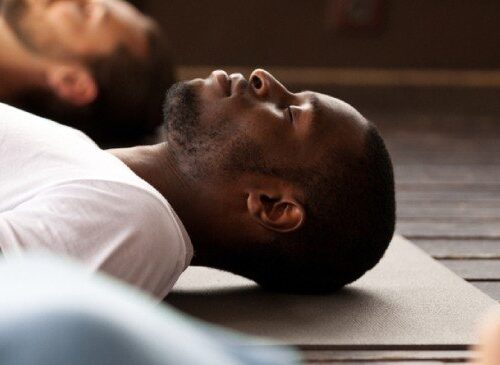
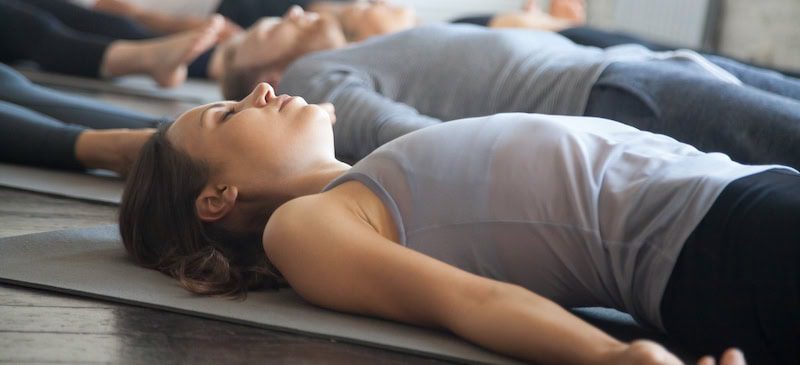
Since it’s practiced entirely in savasana, which means you’re lying down, there’s really no “wrong” way to do it. (If lying down isn’t accessible to you, you can also practice yoga nidra in a chair.)
Since it’s guided, you’ll probably have less frustration compared to sitting down and trying to meditate cold turkey. And while yoga nidra isn’t technically guided sleep meditation, it’s often considered a meditation for sleep because the guided relaxation helps improve sleep patterns in many people.
Best of all, yoga nidra for sleep enhancement typically grows stronger the longer you practice.
Yoga nidra is one of the most approachable yoga practices because you do it lying down in savasana (corpse pose), and there’s no risk of injury from hard poses or strenuous movement.
2. May help relieve PMS symptoms
If you find yourself Googling “how to get rid of period cramps,” it may be time to give yoga nidra a try. Some studies have revealed that regular yoga nidra practice helps reduce symptoms like anxiety and negative mood associated with menstrual irregularities, compared with medication alone.
For instance, randomized, controlled trial of 150 females with period irregularities (severe pain, unpredictable cycles) published in the International Journal of Yoga found that women who took medication and practiced yoga nidra for for 35 to 40 minutes five days a week experienced fewer symptoms, like painful cramps, anxiety and depression, compared to women who took medication alone.
3. Helps boost dopamine levels
We already know that yoga changes your brain. In a first-of-its-kind study in 2002, scientists used brain scan imaging to confirm the natural dopamine-boosting effect of yoga nidra.
In fact, a single yoga nidra session resulted in a 65 percent increase in dopamine release, showing the practice helps regulate conscious states at the synaptic level.
PET brain images of the meditators suggested a few things:
- Subjects were in a deeply relaxed state but not drowsy.
- The meditative state is completely different than sleep state and includes conscious awareness.
- This state lasted for 45 minutes and was evenly spread throughout the brain.
4. Helps manage stress and anxiety
By calming the nervous system and shifting from fight-or-flight into rest-and-digest mode, yoga nidra has been shown to effectively reduce stress and anxiety in a wide range of people.
For example, a randomized, controlled trial of hypertensive patients showed that adding yoga nidra and om chanting for two months led to significant reductions in stress and anxiety scores compared with a control group, suggesting improvements in psychological well-being and autonomic function.
Another randomized, controlled trial published in 2025 provided online yoga nidra over two months and found that regular practice was associated with reductions in diurnal salivary cortisol (a biological stress marker) as well as improvements in measures related to stress and anxiety compared with controls.
5. Can relieve tension and pain
Deep relaxation in yoga nidra helps release physical and emotional tension, which can reduce muscle tightness and discomfort over time.
In a study published in Pain Management Nursing in 144 adults undergoing colonoscopy, participants who listened to a yoga nidra recording reported significantly lower perceived pain and greater overall satisfaction compared with a no-treatment control group, suggesting that this practice can help reduce pain and related tension during uncomfortable procedures.
Another pilot study published in Complementary Therapies in Clinical Practice in 2025 explored yoga nidra for persistent pain conditions and found that people with chronic pain who engaged in a six-week yoga nidra program described deep relaxation, improved pain self-management and reduced tension, indicating therapeutic potential for easing pain and muscular tension in ongoing pain care.
It’s been shown to help lower back pain in patients with lumbar spondylitis.
6. Can help with arthritis symptoms
Scientific research has noted that yoga nidra may help lessen symptoms associated with rheumatoid arthritis, paralleling other research on mind-body therapies and chronic inflammation.
For example, research published in Ancient Science of Life found that incorporating yoga nidra into care for people with rheumatoid arthritis was associated with meaningful improvements in arthritis symptoms, including reduced joint pain, tenderness, stiffness and swelling, compared with baseline measures. This suggests that the deep relaxation and stress regulation components of yoga nidra may help ease discomfort and tension related to arthritis.
7. Promotes sleep
Although yoga nidra isn’t meant to induce sleep itself, practicing it regularly has been associated with improved sleep quality and reduced insomnia.
In a randomized, controlled trial of adults with chronic insomnia published in the National Medical Journal of India, participants who practiced yoga nidra experienced improvements in total sleep time, sleep efficiency, reduced wake after sleep onset and deeper stages of sleep on polysomnography, along with a significant reduction in salivary cortisol, a stress hormone linked to poor sleep.
Another study found that after several weeks of yoga nidra practice, participants had significantly improved sleep efficiency, less time awake after initially falling asleep and increases in slow-wave (deep) sleep on EEG, indicating enhanced restorative sleep.
These findings suggest that yoga nidra may support sleep by reducing physiological stress and enhancing deeper sleep stages in humans.
8. Benefits people with PTSD
Yoga nidra’s calming effect on the nervous system has been linked to reduced symptoms of post-traumatic stress disorder, particularly when used consistently.
For instance, in a pilot study of women with trauma-related PTSD, participants who completed a 10-week iRest® yoga nidra program reported significant reductions in self-reported PTSD symptoms, decreases in negative self-blame and improvements in mood compared with their own baseline scores.
In another clinical trial with combat veterans using a weekly iRest yoga nidra approach, participants reported reduced emotional reactivity, anxiety and increased relaxation and self-awareness, indicating improvements in PTSD-related symptoms after the intervention.
9. May help manage diabetes symptoms
Some research indicates yoga nidra can help with metabolic regulation and symptom management for people with type 2 diabetes.
One comparative study published in the Indian Journal of Physiology and Pharmacology found that type 2 diabetic patients who practiced yoga nidra daily for 30 minutes alongside their usual oral hypoglycemic medication for 90 days showed significant improvements in glycemic control, with fasting blood glucose decreasing by about 21 mg/dL and post-prandial glucose by about 18 mg/dL compared with those on medication alone. This suggests yoga nidra may help lower blood sugar levels and improve diabetes symptoms when added to standard care.
10. May help ease tinnitus symptoms
Yoga nidra has been reported to help with tinnitus by reducing stress and sharpening focus away from chronic ringing or buzzing sensations.
For example, in a small clinical study of adults with chronic subjective tinnitus who participated in regular yoga sessions that included breathing exercises, meditation and yoga nidra, participants reported significant reductions in tinnitus severity, stress and handicap scores after three months of practice. This indicates that integrated yoga may help ease tinnitus-related distress.
11. Can boost cognition
Studies show improvements in memory, attention and overall cognitive functioning following consistent yoga nidra practice, likely due to its effects on nervous system regulation and brain activity.
In a controlled intervention with 41 participants, individuals who engaged in daily yoga nidra sessions for two weeks showed significantly faster reaction times across a battery of cognitive tests, including visual object learning, abstract reasoning and working memory tasks, compared with their own baseline performance, indicating improved cognitive processing and accuracy after the practice period. This study used objective measures of cognition alongside polysomnography and reported enhanced cognitive outcomes following yoga nidra.
12. Enhances emotional regulation and mood stability
Yoga nidra helps calm the nervous system and improves emotional balance by shifting brain activity toward parasympathetic dominance, which supports mood regulation and decreases emotional reactivity.
One 2025 randomized, controlled trial found that daily yoga nidra practice (11-minute or 30-minute sessions over two months) led to significant improvements in psychological well-being, including reductions in depression and negative mood and increases in acting with awareness, compared with control groups. These changes were also associated with beneficial shifts in stress-related cortisol patterns, suggesting better emotional regulation and mood stability.
Another randomized, controlled trial published in the International Journal of Yoga Therapy determined that frontline healthcare workers practicing yoga nidra for 30 minutes daily during work periods had significantly greater reductions in anxiety and depressive symptoms compared with a relaxation-to-music control group, supporting yoga nidra’s role in improving emotional states in real-world stress conditions.
13. Supports deep rest without physical sleep
Even when practitioners remain physically awake, yoga nidra induces a deeply restorative state often compared to sleep, giving the nervous system a chance to reset and rejuvenate. Research suggests yoga nidra supports a state of deep rest without physical sleep by altering brain activity in ways that resemble restful awareness rather than ordinary wakefulness.
For example, in an fMRI study comparing experienced meditators and novices, yoga nidra practice was associated with distinct changes in brain functional connectivity, particularly reduced activity in the default mode network during the practice, consistent with a state of restful awareness while remaining conscious rather than sleeping. This neural profile aligns with subjective reports of deep rest without loss of awareness.
Similarly, electrophysiological evidence from a human EEG study revealed that during yoga nidra sessions some brain regions exhibited local slow-wave activity characteristic of sleep, while the overall state remained one of awake rest, indicating that parts of the brain enter sleep-like restoration even though the person is not physically asleep.
14. Improves self-awareness and mental clarity
The practice encourages mindful awareness of sensations, breath and thoughts, helping cultivate greater self-awareness, presence and clarity of mind.
In a controlled clinical trial with university students, participants who practiced yoga nidra biweekly for eight weeks showed significantly increased self-esteem, a marker closely tied to self-perception and awareness, along with reduced life-stress levels compared with controls. This suggests improved mental clarity and internal self-regulation after the intervention.
Additionally, neuroimaging and psychophysiological studies in humans have indicated that yoga nidra is associated with distinct alterations in brain networks, such as reduced connectivity in the default mode network during practice, which correspond with reduced mind-wandering and stronger present-moment awareness, supporting enhanced focused attention and clearer mental processing during and after sessions.
These findings suggest that regular yoga nidra practice can help boost self‑awareness and mental clarity through both psychological improvements and measurable changes in brain function.
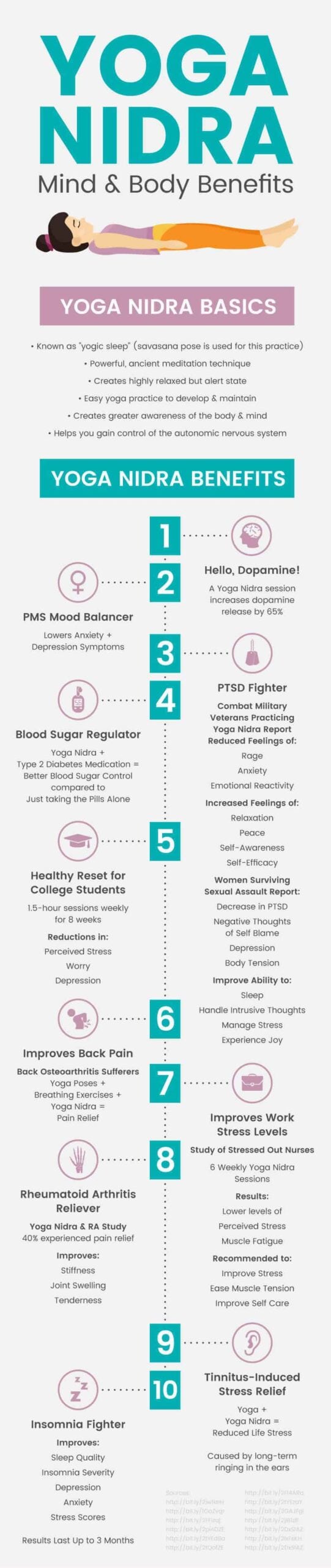
10 steps of yoga nidra
1. Clarify a deep personal desire
Begin by bringing attention to a meaningful inner desire, something connected to healing, wholeness, peace or purpose. This isn’t a surface-level goal, but a heartfelt motivation that reflects what you truly want to experience or become.
2. Form a clear intention
Create a simple, positive intention for the practice. This intention acts like a seed planted in the subconscious and is silently reaffirmed while the mind is deeply receptive.
Reflect on your intention for the yoga nidra session, whether it’s to rest, to reduce stress, to heal or simply to be present, and affirm it with your full awareness.
3. Establish an inner resource and sense of safety
Turn awareness toward a calming internal anchor, such as a peaceful memory, a sense of support or a feeling of steadiness. This inner refuge helps maintain emotional balance as the practice deepens.
Direct your attention inward to a place of safety, ease or comfort … a supportive internal resource that helps ground you emotionally and mentally during the practice.
4. Systematically relax the body and scan your body
Awareness is guided through different regions of the body in a deliberate sequence. By noticing sensations without effort or judgment, the nervous system begins to release stored physical tension.
Gradually move your awareness through the entire body, noticing sensations in each part (from limbs to torso to face), helping release tension and deepen relaxation.
5. Observe the natural breath
Attention shifts to the breath as it flows in and out on its own. Simply noticing its rhythm helps quiet mental activity and stabilize awareness.
Focus on the natural flow of breath as it enters and exits the body, feeling how your abdomen and chest move with each inhalation and exhalation.
6. Allow emotions to surface and welcome your feelings
Whatever emotions arise, whether pleasant, neutral or uncomfortable, are acknowledged without resistance. This step cultivates emotional awareness while reducing reactivity.
Notice whatever feelings or emotions come up, and allow them to be present without trying to change or judge them.
7. Witness your thoughts and notice thought patterns
Thoughts are observed as passing mental events rather than something to engage with. This creates distance from habitual thinking and encourages mental clarity.
Observe the thoughts that come up like events passing through awareness. Allow yourself to watch them without engaging, judging or altering them.
8. Cultivate a sense of well-being and experience joy
Awareness turns toward feelings of ease, contentment or quiet joy. Allowing positive sensations to be felt in the body helps reinforce a relaxed, balanced state.
Invite sensations of joy, bliss or well-being into your awareness, and feel those sensations radiate through your body.
9. Rest in observing awareness (observe your “self”)
Attention shifts from experiences themselves to the awareness that observes them. This step encourages recognition of a deeper sense of self beyond thoughts, emotions or roles.
Turn your attention to your sense of self (how you identify and experience your personality), and then shift into the role of an observing witness, noticing these patterns with detached awareness.
10. Reflect on your practice
As the session ends, take a moment to reflect on the journey you just experienced, noticing how peace, calm or clarity can carry forward into your daily life.
The practice concludes by gently reconnecting with physical sensations and the surrounding environment. Awareness returns slowly so the calm, grounded state can carry into daily life.
Yoga nidra audio practice
Now that you know about yoga nidra’s health benefits, it’s time to give it a try. Below, D’Agostino leads a condensed yoga nidra session to give you a taste of what it’s all about.
A customary yoga nidra practice in the Himalayan tradition takes about an hour and a half, but doing even shorter versions can bring brain benefits.
Don’t get frustrated if you aren’t experiencing deep relaxation the first time you practice.
“All of these practices have a cumulative effect,” D’Agostino noted. “You may notice that when you first start out, the effects go away relatively quickly. But when you do it daily and regulate, you can stay in those states of relaxation longer and longer. Or if a stressor does come, you may notice that you handle it with better ease.”
You will want to take a few minutes to properly prepare to make sure you feel comfortable and uninterrupted. Then, you’re ready to get started!
“You’ll find that a daily practice and the cumulative effects of that is where it’s really at,” she said.
Here are some basic yoga nidra instructions and recommendations.
- When you start to practice, make sure you won’t be interrupted. That can be very jolting to the nervous system.
- Make sure you’re warm.
- Create an environment where you feel safe and secure.
- Turn off your phone. No distractions.
- Make sure your family knows no one should knock on the door or interrupt you.
- If you fall asleep, get up from the practice. You don’t want to develop a bad habit of falling asleep during yoga nidra.
- Be comfortable. Use props under your knees, a small pillow under the head, and comfortable clothing and socks.
Here, D’Agostino offers a condensed yoga nidra script to help you experience the practice. This yoga nidra audio is free to enjoy.
Precautions
Yoga nidra is scientifically proven to help lower stress, along with many other health benefits. Because it requires no strenuous yoga poses, it’s really accessible for almost everyone.
However, if you experience back pain while lying on your back, be sure to put a blanket, foam roller or bolster under your knees to eradicate any lower back pain or discomfort.
And remember, this isn’t a guided meditation for sleep. In other words, don’t get in the bad habit of falling asleep during yoga nidra.
If yoga for sleep is what you’re looking for, try these four gentle poses.
Frequently asked questions
What is yoga nidra?
Yoga nidra is a relaxation and guided meditation practice often called “yogic sleep.” It intentionally leads the practitioner into a state between wakefulness and sleep, promoting deep mental and physical relaxation.
How is yoga nidra practiced?
Practice typically involves lying on your back, listening to a guided script or teacher, and moving your awareness through your body, breath and imagery. It doesn’t require physical yoga postures, making it accessible to most people.
Is yoga nidra the same as sleep?
No. Although the term “yogic sleep” might make it sound like regular sleep, yoga nidra is a conscious practice in which the body may appear asleep but the mind remains aware.
How long should a yoga nidra session be?
Sessions can range from 10 to 20 minutes for beginners to 30 to 60+ minutes for deeper practice, depending on the guidance and personal preference.
Can yoga nidra help with anxiety?
Yes. Research shows yoga nidra can be effective in reducing stress and anxiety by calming the nervous system and shifting the body into a parasympathetic (rest-and-digest) state.
Do I need experience with yoga to do yoga nidra?
No. Yoga nidra requires no prior yoga experience, physical strength or flexibility. It’s especially accessible because you practice it lying down.
When is the best time to practice yoga nidra?
Many people practice yoga nidra in the morning or evening. It can be used to start the day with calm focus or unwind before sleep.
Conclusion
- Yoga nidra is an ancient practice that is often referred to as “yogic sleep.” Don’t confuse yoga nidra with a deep sleep meditation. While it very well may improve overall sleep health, you shouldn’t fall asleep while practicing it.
- While it isn’t sleep guided meditation, you can use the practice to tune out external stressors and look within for lower overall stress levels.
- Scientific studies suggest yoga nidra is beneficial in helping reduce symptoms of stress, PTSD, insomnia, rheumatoid arthritis and type 2 diabetes.
- Many consider yoga nidra easier to practice compared to jumping straight into meditation. Because you lie on your back in savasana pose for the duration of yoga nidra, it’s considered accessible for almost everyone.
- Yoga nidra isn’t the same as yoga for sleep. If that’s what you’re looking for, try gentle poses like wide-angle standing forward bend, reclining bound angle pose, downward facing twist and supported child’s pose.


![The 9 Best Yoga Poses for Your Gut [Digest + Detox]](https://nuroperformance.ca/wp-content/uploads/2020/12/the-9-best-yoga-poses-for-your-gut-digest-detox.jpg)